
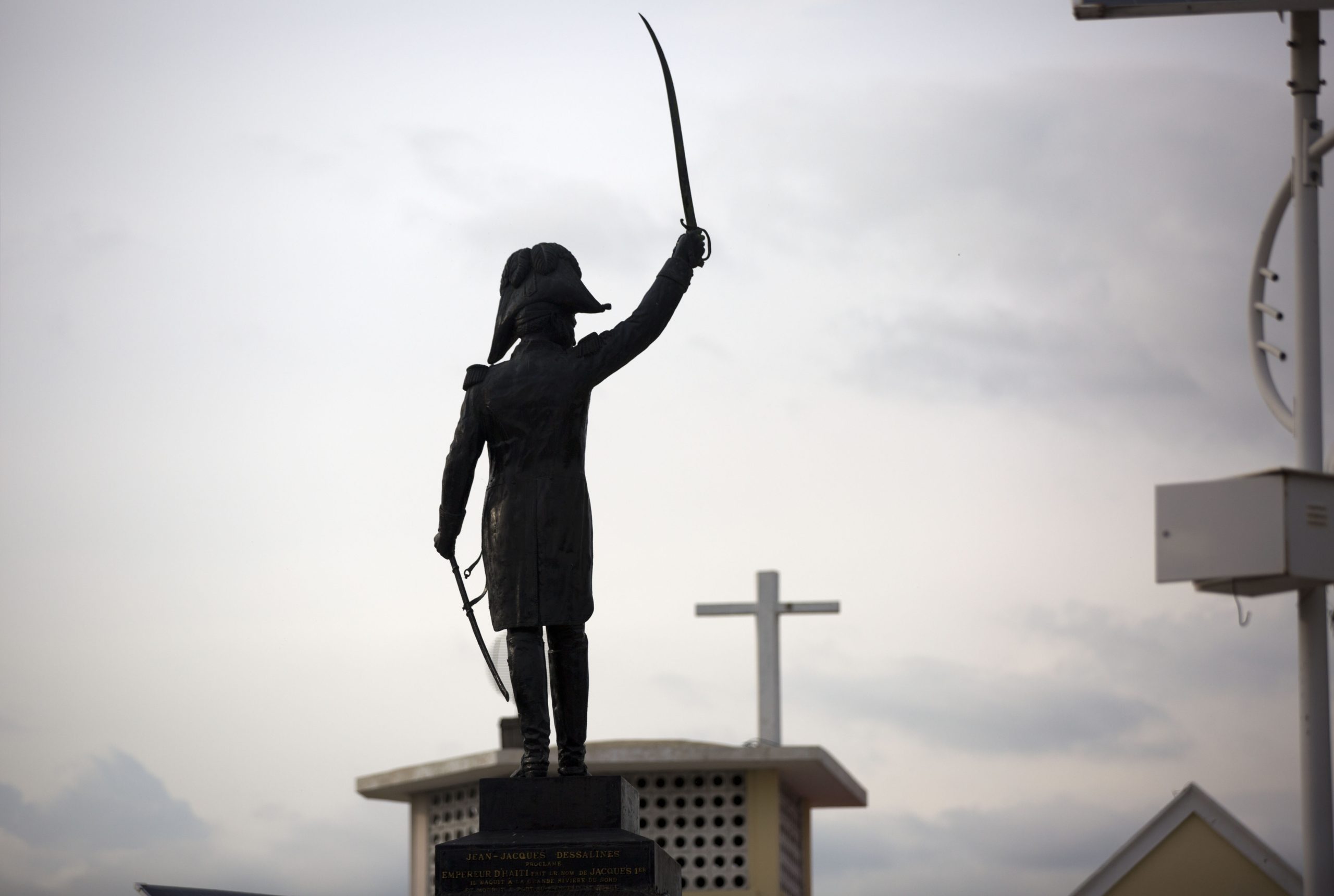
Overview:
Jean-Jacques Dessalines, a number one determine within the Haitian Revolution and Haiti’s first head of state after independence, was assassinated in Port-au-Prince close to Pont-Rouge on Oct. 17, 1806. After serving to defeat French forces, he proclaimed Haiti’s independence on Jan. 1, 1804. His legacy encompasses the defeat of slavery and colonial rule, authoritarian management and the political divisions that adopted his dying. The anniversary provides a chance to mirror on Haiti’s founding, sovereignty and persevering with wrestle to make freedom significant for all its individuals.
Editor’s observe: This story is a part of our “At the moment in Historical past” collection, the place The Haitian Instances revisits pivotal moments that formed Haiti and its diaspora.
On Oct. 17, 1806, Jean-Jacques Dessalines, Haiti’s first head of state after independence, was assassinated close to Pont-Rouge, north of Downtown Port-au-Prince. His dying marked a turning level within the nation’s early historical past, ending the rule of a revolutionary chief who helped defeat French colonial forces, abolish slavery and set up an unbiased nation.
Dessalines was greater than a army commander. He was a central determine within the Haitian Revolution, the rebellion that reworked an enslaved inhabitants right into a drive able to defeating a colonial energy and founding a nation. His legacy stays inseparable from Haiti’s independence — and from the enduring debate over how freedom ought to be exercised, protected and shared.
From slavery to revolution
Born into slavery within the French colony of Saint-Domingue round 1758, Dessalines grew up beneath a colonial system constructed on pressured labor, racial hierarchy and violence. The colony’s plantation economic system generated huge wealth for France whereas subjecting enslaved Africans to brutal exploitation.
The revolution that started in 1791 challenged that system. Dessalines joined the wrestle and rose by the ranks of the revolutionary military, serving alongside leaders together with Toussaint Louverture. He grew to become recognized for his army resolve and dedication to defeating French efforts to retain management of the colony.
After French forces captured and deported Louverture to France in 1802, the place he died in captivity a few yr later. Dessalines emerged as a number one commander towards the expeditionary forces despatched by Napoleon Bonaparte to reassert French authority. The marketing campaign threatened the positive aspects of emancipation and raised fears that slavery could be restored.
Dessalines and different revolutionary leaders continued the struggle. The decisive Battle of Vertières on Nov. 18, 1803, helped safe the French defeat. On Jan. 1, 1804, Dessalines proclaimed Haiti’s independence, ending French colonial rule and establishing the world’s first unbiased Black republic.
The victory reworked world historical past. Haiti demonstrated that individuals subjected to slavery may overthrow a colonial regime, defeat a serious army energy and set up an unbiased state. Its independence grew to become a landmark within the wrestle towards slavery and colonialism.
An uncompromising chief
For Dessalines, independence required greater than a declaration. Haiti needed to defend its sovereignty towards international powers that may search to reclaim the territory and restore the colonial system.
In 1804, he declared himself emperor, taking the identify Jacques I. His authorities sought to consolidate the brand new nation and defend its independence, however his rule was additionally authoritarian, marked by concentrated energy and harsh measures towards perceived enemies.
One of the contested facets of his legacy is the 1804 bloodbath of many of the remaining French inhabitants in Haiti. The killings adopted years of colonial violence and fears that France would try to revive slavery, however in addition they stay a painful a part of the nation’s founding historical past.
Dessalines’ management mirrored the revolution’s central contradiction: the struggle to safe freedom from a brutal colonial system unfolded by extraordinary violence, whereas the brand new nation’s rulers confronted tough questions on easy methods to govern and distribute energy.
His dedication to guard Haiti’s independence helped form the nation’s founding. But tensions over his strategies and the focus of authority contributed to divisions amongst revolutionary leaders — divisions that intensified after his dying.
The assassination that modified Haiti
By 1806, opposition to Dessalines had grown amongst influential army and political figures. Disputes over his rule, insurance policies and focus of energy culminated in a conspiracy towards him.
On Oct. 17, 1806, Dessalines was killed close to Pont-Rouge. His assassination uncovered deep divisions amongst leaders who had fought collectively to win independence.
The nation quickly fractured politically. Henri Christophe established a authorities within the north, whereas Alexandre Pétion led a republic within the south. Their competing governments mirrored disagreements over management and the route of the brand new nation.
The cut up underscored the challenges going through Haiti after its revolutionary victory. Defeating colonial rule had required extraordinary unity amongst army leaders, however constructing a secure nation raised tough questions on governance, authority and the distribution of energy.
Dessalines’ dying didn’t undo the independence he helped safe. Haiti survived as a sovereign nation, and the declaration of 1804 remained a landmark within the world wrestle towards slavery and colonial domination.
Why Oct. 17 issues
Oct. 17 just isn’t solely the anniversary of a high-profile political assassination or a vacation in Haiti. It is a chance to recollect the worth Haitians paid to win their freedom and the revolutionary chief who helped flip that wrestle right into a nation.
Dessalines’ legacy requires an sincere reckoning. He was a liberator who helped defeat slavery and colonial rule, however he was additionally an authoritarian ruler whose strategies and train of energy stay topics of historic debate. Remembering him absolutely means acknowledging each the dimensions of his achievement and the contradictions of his management.
For Haiti and its diaspora, the anniversary invitations reflection on what independence means past freedom from international rule. It raises enduring questions on nationwide unity, accountable management, sovereignty and whether or not the promise of freedom reaches peculiar Haitians.
On Oct. 17, 1806, Haiti misplaced one of many architects of its independence. The perfect he helped convey into existence — that Black individuals may overthrow slavery, defeat a colonial empire and govern themselves — outlived him.
Commemorating the day means honoring that revolutionary achievement whereas confronting the persevering with work of creating Haiti’s freedom significant for each technology.