
Overview:
Over 200 individuals, together with greater than 100 youngsters, gathered Aug. 15 in Léogâne for “Let’s Play Collectively,” a group occasion reviving conventional Haitian video games whereas giving youngsters a break from telephones and different screens.
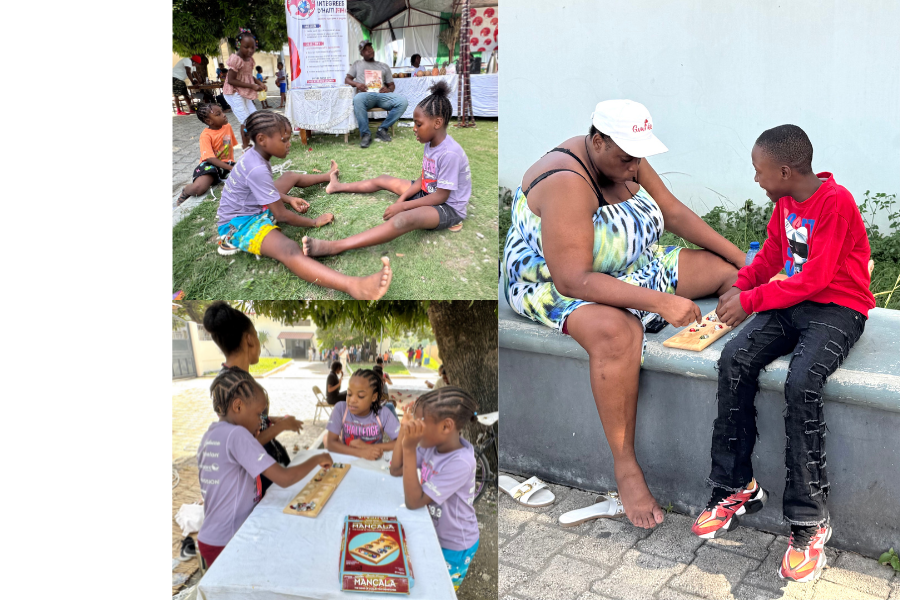
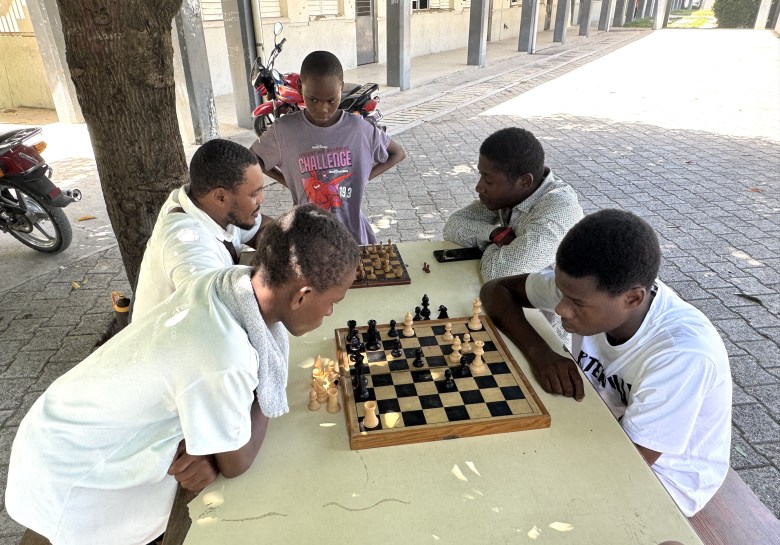
LÉOGÂNE, Haiti — For seven hours on Aug. 15, the courtyard of Anacaona Excessive College— about 21 miles southwest of Port-au-Prince, the Haitian capital— grew to become a spot the place youngsters traded telephones and screens for leap ropes, dominoes, playing cards, hopscotch, knucklebones, mancala, chess and different board video games.
Greater than 200 individuals, together with over 100 youngsters, gathered for the primary version of “Ann Jwe Ansanm” — Haitian Creole for “Let’s Play Collectively.” This group initiative goals to revive conventional Haitian video games that organizers say are disappearing from the day by day lives of youthful generations.
The occasion, organized by youth group Yogann An Mouvman (YAV) — which accurately means “Léogâne in Motion”— in partnership with the grassroots group Built-in Ladies of Haiti (FIH), was greater than a day of leisure. Organizers needed to create an area the place youngsters might work together face-to-face, mother and father might reconnect with video games from their very own childhoods and youthful generations might study traditions more and more displaced by digital leisure.
“We should protect our conventional video games, that are in decline, revive them amongst younger individuals and adults, but additionally follow them and promote their intergenerational transmission,” mentioned Clifford Lanéus, YAV’s assistant coordinator.
A break from screens whereas reconnecting generations by play
The exercise comes as smartphones, social media and different types of digital leisure more and more compete with conventional types of play.
In Haiti, video games that after introduced youngsters collectively in neighborhoods, schoolyards and household courtyards have gotten much less seen in some communities. Lanéus mentioned he has noticed youngsters spending extra of their free time on social media, together with throughout faculty holidays, relatively than taking part in the video games he remembers from his personal childhood.
“We should protect our conventional video games, that are in decline, revive them amongst younger individuals and adults, but additionally follow them and promote their intergenerational transmission.”
Clifford Lanéus, YAV’s assistant coordinator.
The organizers responded by making a day centered on bodily play and direct interplay.
Starting round 10 a.m., youngsters, youngsters and adults regularly stuffed the schoolyard. Some arrived with their mother and father, aunts, uncles or neighbors. Youngsters from orphanages and care facilities additionally attended with their caregivers after receiving invites from FIH.
Music, laughter and dialog stuffed the courtyard as members moved between video games.
For the organizers, getting youngsters away from their screens was not about rejecting know-how. It was about creating a chance to expertise types of recreation that depend upon bodily exercise, creativeness and interplay with different individuals.
Dad and mom and younger adults weren’t merely spectators.
A number of joined their youngsters within the video games, creating moments that related their childhood experiences with these of a youthful technology.
Phara Bazile Laguerre, 49, who attended together with her three youngsters and a younger neighbor, mentioned she grew up taking part in conventional video games and nonetheless performs a few of them together with her household.
“I at all times play with my youngsters at dwelling in addition to with my mom,” she mentioned. “We play playing cards and mancala, however mancala is my favourite recreation.”
For some mother and father, the occasion introduced again reminiscences of childhood video games that they had not performed in years.
“It’s been a number of a long time since I final performed these video games,” one participant mentioned. “Right now, I really feel like I’m reliving my childhood. It introduced again many reminiscences and the great instances I spent taking part in once I was youthful.”
For Laguerre, taking part in conventional video games together with her household stays a technique to spend time collectively.
“These video games take us again to our roots.”
Rose Gina Gard Saintonge, coordinator of FIH
She believes these moments can strengthen relationships between mother and father and youngsters whereas giving households a substitute for more and more screen-centered types of leisure.
Preserving greater than a recreation
For Rose Gina Gard Saintonge, FIH’s coordinator, conventional video games are a part of Haiti’s cultural reminiscence.
“These video games take us again to our roots,” she mentioned.
Saintonge joined the kids in taking part in knucklebones, a recreation she remembers from her childhood.
“I performed jacks. It had been a number of years since I had performed this recreation,” she mentioned. “I felt like I used to be again in my childhood.”
The occasion additionally launched some youngsters to video games that they had by no means performed earlier than.
Jessica Louis, 7, mentioned she jumped rope for the primary time.
Kiara Pierre, 15, who attended from an orphanage, mentioned she loved the expertise and hoped for one more version.
“I had a good time,” she mentioned. “I’m already trying ahead to a second version.”
The organizers mentioned inviting youngsters from care facilities was intentional. Saintonge mentioned youngsters residing in these settings, like different youngsters locally, want alternatives for recreation, social interplay and connection.
-
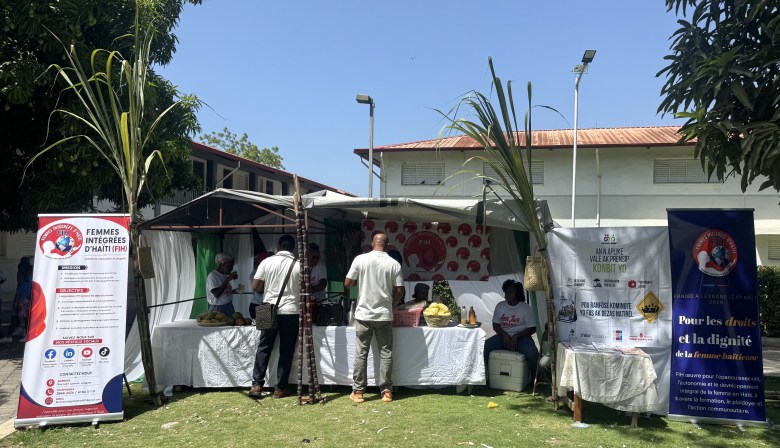
Individuals buy merchandise from FIH distributors throughout “Let’s Play Collectively” on Saturday, Aug. 15, 2026, at Lycée Anacaona in Léogâne, Haiti. Picture by Daniella Saint-Louis for The Haitian Occasions.
-
Two younger males and youngsters play chess throughout “Let’s Play Collectively” on Saturday, Aug. 15, 2026, at Lycée Anacaona in Léogâne, Haiti. Picture by Daniella Saint-Louis for The Haitian Occasions.
-
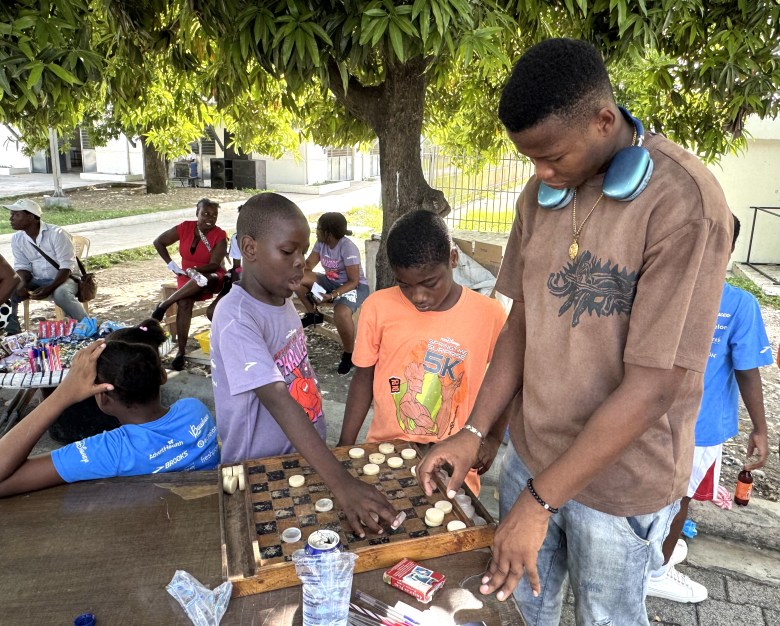
A younger man and a baby play checkers throughout “Let’s Play Collectively” on Saturday, Aug. 15, 2026, at Lycée Anacaona in Léogâne, Haiti. Picture by Daniella Saint-Louis for The Haitian Occasions.
-
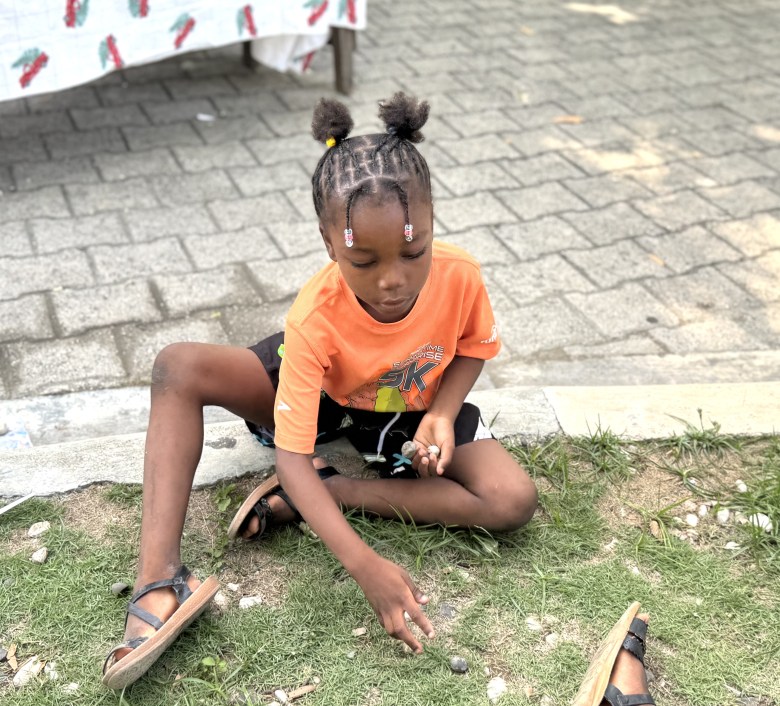
Somewhat lady practices taking part in jacks with small rocks throughout “Let’s Play Collectively” on Saturday, Aug. 15, 2026, at Lycée Anacaona in Léogâne, Haiti. Picture by Daniella Saint-Louis for The Haitian Occasions.
An outdated custom in a altering Haiti
The Léogâne occasion displays a broader problem going through Haitian households: the right way to protect cultural practices as youngsters’s leisure habits change.
-
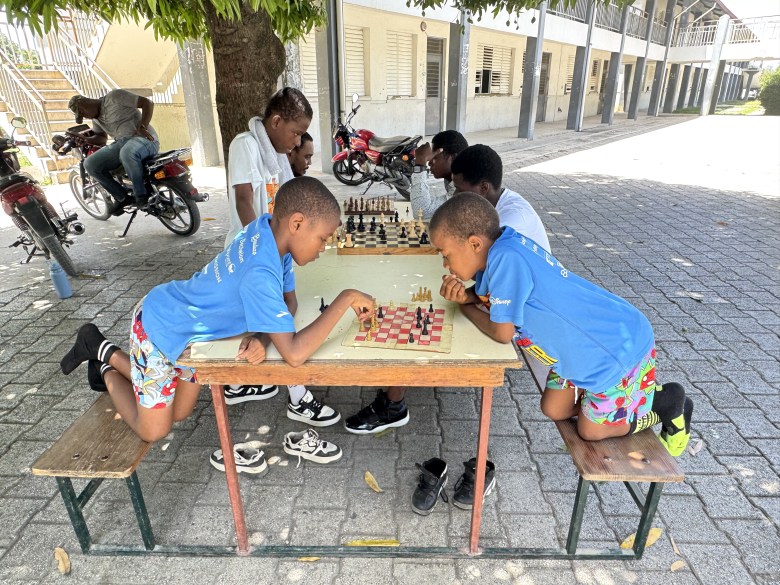
Youngsters study to play chess throughout “Let’s Play Collectively” on Saturday, Aug. 15, 2026, at Lycée Anacaona in Léogâne, Haiti. Picture by Daniella Saint-Louis for The Haitian Occasions.
-
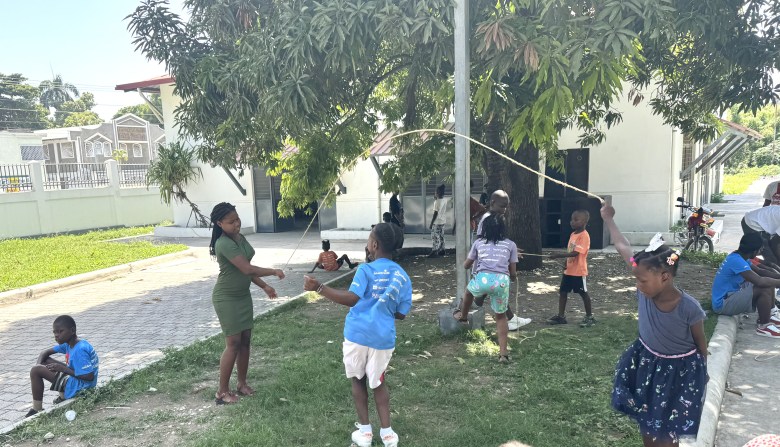
Youngsters leap rope within the courtyard of Lycée Anacaona throughout “Let’s Play Collectively” on Saturday, Aug. 15, 2026, in Léogâne, Haiti. Picture by Daniella Saint-Louis for The Haitian Occasions. -
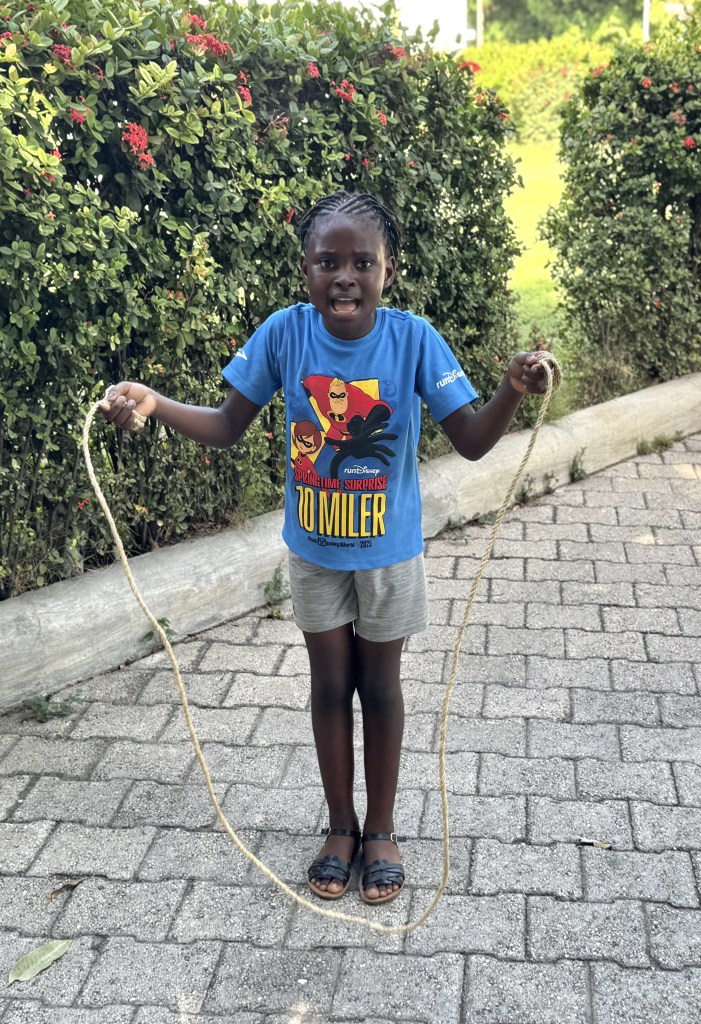
A younger lady jumps rope throughout “Let’s Play Collectively” on Saturday, Aug. 15, 2026, at Lycée Anacaona in Léogâne, Haiti. Picture by Daniella Saint-Louis for The Haitian Occasions.
-
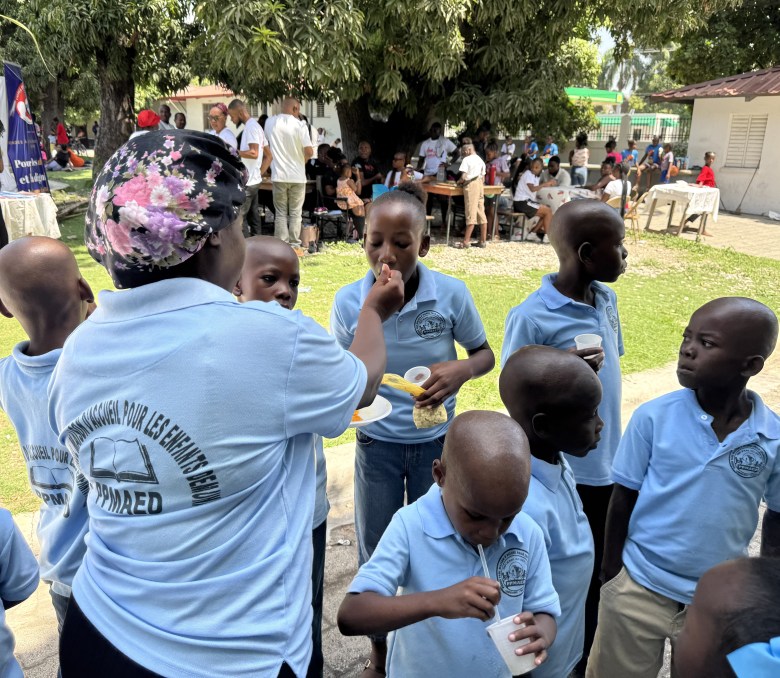
Some orphans who attended the primary version of “Let’s Play Collectively” depart Lycée Anacaona in Léogâne on Saturday, Aug. 15, 2026. Picture by Daniella Saint-Louis for The Haitian Occasions.
Conventional video games are handed from one technology to a different largely by follow. When youngsters cease seeing mother and father, grandparents and older siblings taking part in these video games, the data can disappear with them.
That’s the reason organizers see occasions reminiscent of “Let’s Play Collectively” as greater than one-day actions.
They hope the video games will return to properties, neighborhoods and colleges, the place youngsters can study them from older generations and proceed passing them on.
For the adults who participated, the day supplied an opportunity to revisit a well-known a part of their childhood. For the kids, a few of whom had been taking part in the video games for the primary time, it supplied an introduction to a type of Haitian cultural heritage which may in any other case turn into more and more distant.
Because the telephones remained apart and the video games continued within the schoolyard, the organizers’ message was easy: preserving a practice can start with making time to play.
“I’m already trying ahead to a second version,” 15-year-old Pierre concluded.