
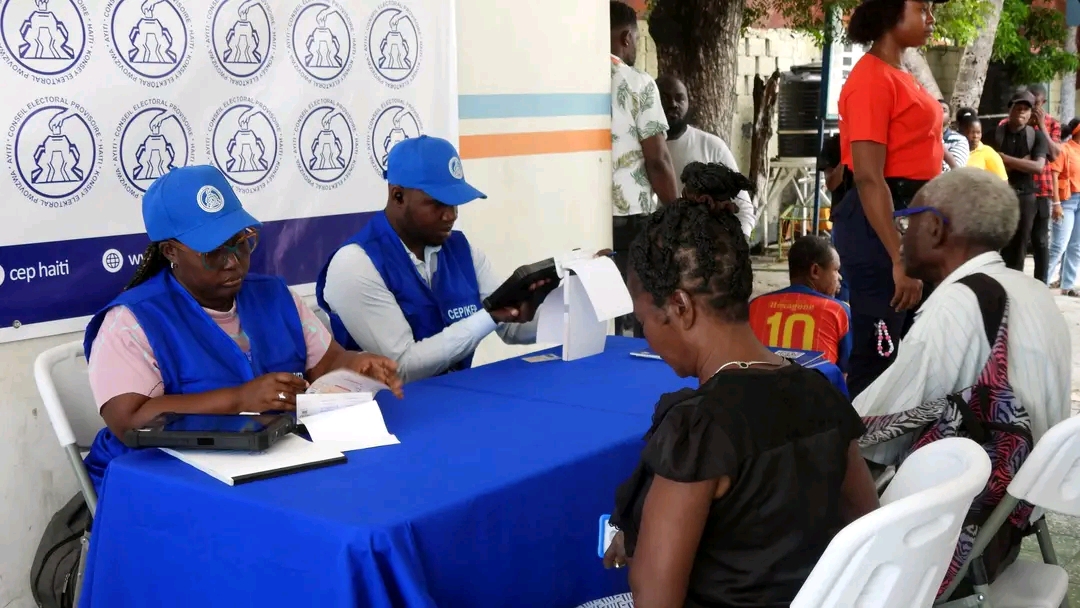
Overview:
Haiti’s first election in a decade faces greater than bodily safety and logistical challenges. Digital disinformation, manipulated content material, and potential cyberattacks on electoral programs might undermine voter confidence and the legitimacy of the outcomes. Public coverage analyst Ervens Jean-Pierre provides an in depth evaluation of the threats—significantly the much less seen ones—and recommends measures authorities can take to mitigate them earlier than it’s too late.
BOSTON —- Haiti’s Provisional Electoral Council (CEP) has set Dec. 13, 2026, because the date for the primary spherical of presidential and legislative elections, with a runoff and native elections scheduled for Feb. 21, 2027. The vote can be the nation’s first nationwide election in a decade. Nonetheless, it’s approaching amid a safety disaster, political instability, mass displacement and deep public mistrust of establishments.
A lot of the eye has centered on essentially the most seen threats: whether or not voters can safely attain polling stations, whether or not displaced individuals will have the ability to take part, and whether or not illicit cash will affect candidates and campaigns.
These considerations are essential. However one other menace might undermine the election with out a single polling station being attacked: digital interference.
Disinformation, manipulated movies, coordinated social media campaigns, and assaults or false claims involving electoral know-how might affect how Haitians perceive the marketing campaign, suppress turnout, and, maybe most damagingly, persuade voters that an election was stolen even when ballots had been counted precisely.
For Haiti, the stakes are significantly excessive this election cycle. The election system might be bodily safe and technically correct but nonetheless fail if voters don’t belief the knowledge surrounding it or the consequence it produces.
Haiti enters the electoral interval with giant components of the nation affected by armed gangs’ violence. The United Nations has estimated that gangs management between 85% and 90% of Port-au-Prince.
The safety disaster has displaced greater than 1.4 million individuals and made motion tough in lots of communities. Political and financial instability have additional weakened public confidence in authorities establishments.
Rosy Auguste Ducéna, program supervisor for the Nationwide Community for the Protection of Human Rights (RNDDH), has argued that territorial control itself can affect an election as a result of the departments most affected by armed teams symbolize a major share of Haiti’s citizens.
“In the event that they management the West, Artibonite, and Centre departments, they stunning a lot management the elections,” stated Auguste Ducéna, highlighting that these areas make up about 60 percent of the citizens.
However bodily management is just a part of the issue.
Whereas a gang roadblock can stop somebody from reaching a polling station, digital interference can affect whether or not that individual believes voting is worth it within the first place.
“Disinformation not solely fuels suspicion however also can incite organized resistance towards perceived fraud, regardless of empirical proof.”
Researcher Ansar Suherman and colleagues
A false message claiming {that a} polling station has been moved, that violence has erupted close by or that voting has been canceled might suppress participation with out anybody bodily blocking a street.
Likewise, a fabricated outcomes announcement circulated instantly after voting might create confusion earlier than election officers have time to reply.
The menace, subsequently, is just not merely whether or not somebody can manipulate votes. It’s whether or not somebody can manipulate what voters imagine in regards to the election.
Haiti’s data setting is weak
Haiti’s digital footprint could seem comparatively small, however that doesn’t make the nation proof against on-line manipulation.
In response to a Data Portal report, about 39% of the inhabitants — roughly 4.7 million individuals — was estimated to be on-line in 2026.
Facebook accounts for a big share of social media exercise, accounting for near 7 in 10 social media visits within the nation, whereas cellular units are the first approach many Haitians entry the web. That creates an setting by which a small variety of platforms can have an outsized affect on the knowledge individuals obtain.
The issue is just not merely that false data exists. It’s that false data can journey sooner than establishments can confirm and proper it.
Researchers monitoring WhatsApp and Telegram groups discovered that deceptive movies portraying Haitian gangs as partaking in “cannibalism” circulated by means of lots of of public teams in 2024 and reached tens of millions of individuals, even after the fabric had been debunked.
Haitian armed teams have additionally demonstrated their capability to make use of social media. Gang leaders have used livestreams, TikTok, WhatsApp and different platforms to difficulty threats, present items to influencers, and form narratives.
The infrastructure for digital affect already exists. An election merely offers it a brand new goal.
The hazard is greater than pretend movies
Digital interference doesn’t essentially require hacking an election system.
A fabricated video exhibiting a candidate making a controversial assertion might unfold throughout the remaining days of the marketing campaign. A community of faux accounts might amplify allegations of fraud. A manipulated picture might falsely recommend that election officers favor one candidate.
And a false declare that election outcomes have been manipulated could also be simply as damaging as an precise cyberattack.
That distinction issues as a result of elections rely not solely on the accuracy of the depend but additionally on public acceptance of the consequence.
A 2026 academic study by researcher Ansar Suherman and scholar colleagues on disinformation in growing democracies discovered that manipulated data can present shedding candidates and their supporters with narratives they will use to reject election outcomes, no matter whether or not the vote itself was really compromised.
“Disinformation not solely fuels suspicion however also can incite organized resistance towards perceived fraud, regardless of empirical proof,” the authors wrote.
“In quite a few circumstances, shedding actors deploy claims of stolen elections as post-fact rationalization for defeat, fostering civil unrest and obstructing peaceable democratic transitions,” they added.
In Haiti, the place belief in electoral establishments is already weak—and elections typically finish in turmoil and contestations— such claims might achieve traction rapidly.
A 2024 Internews assessment discovered that 93% of Haitians surveyed didn’t belief the electoral system, whereas fewer than 2% expressed confidence in how elections had been performed.
That degree of mistrust creates fertile floor for manipulation.
Haiti has already been used as disinformation materials
Haiti doesn’t have to carry an election to grow to be a goal of election-related affect operations.
Through the 2024 U.S. presidential election, intelligence companies attributed a fabricated video claiming that Haitian migrants were illegally voting in Georgia to Russian affect operators. The video featured actors pretending to be Haitian migrants and was broadly circulated earlier than Georgia election officers publicly debunked it.
The episode demonstrated one thing essential for Haiti: actors trying to affect political perceptions don’t essentially want entry to a rustic’s electoral infrastructure. They’ll manufacture a story from outdoors the nation and distribute it by means of platforms utilized by tens of millions of individuals.
Overseas governments will not be the one potential actors.
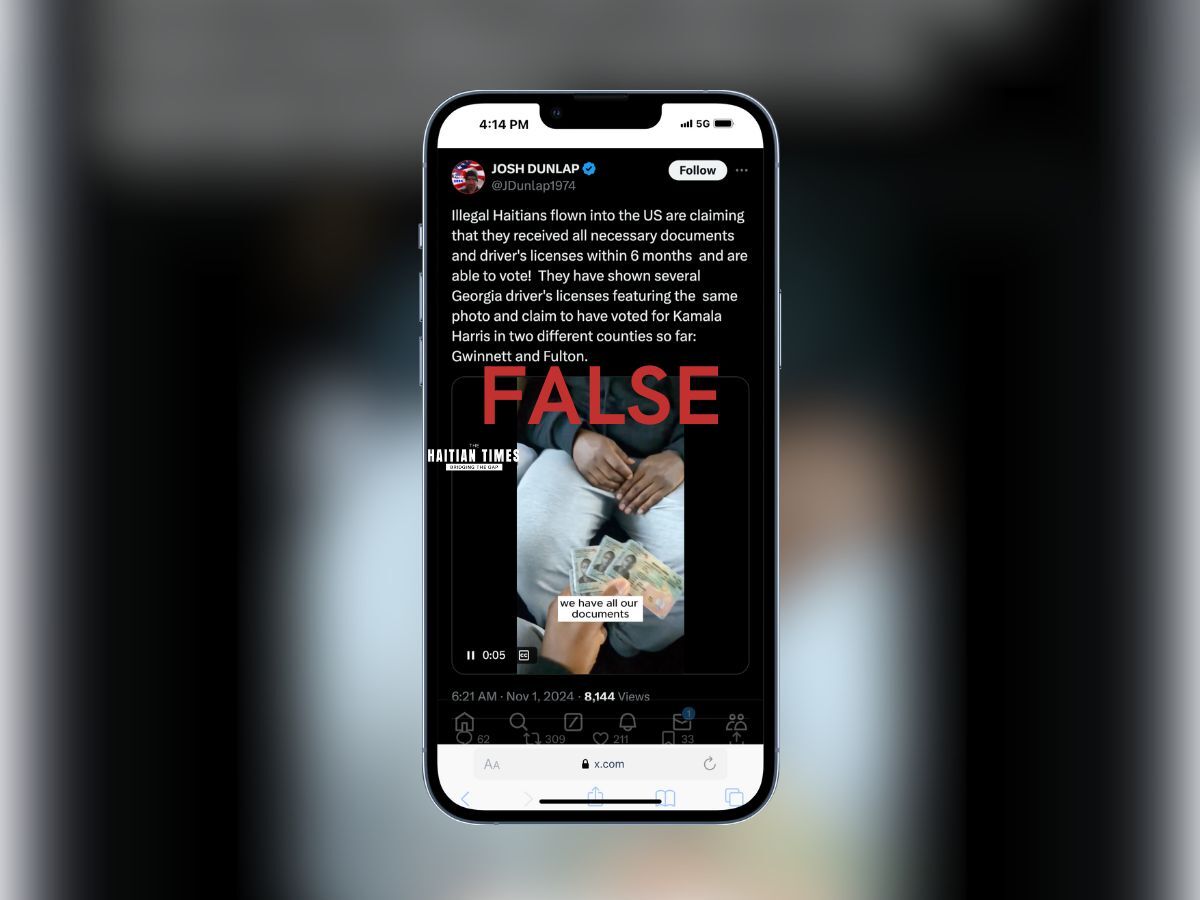
Disinformation marketing campaign targets Haitians as Russia seeks to stoke division forward of election
A 2023 investigation by The Guardian reported on “Workforce Jorge,” a non-public operation that claimed to control 33 presidential elections worldwide—with 27 makes an attempt being profitable—utilizing networks of faux accounts and hacked communications.
The broader lesson is that election interference has grow to be more and more accessible to personal actors with cash, technical experience and a political goal.
In Haiti, potential beneficiaries might embody political candidates, financial pursuits, armed teams or overseas actors looking for to affect the nation’s political path.
Weaknesses in electoral system can amplify falsehood; Haiti is just not alone
Digital interference turns into extra harmful when it exploits actual weaknesses.
Haiti’s voter-registration and identification programs have confronted longstanding considerations over outdated data and gaps in coordination amongst authorities establishments.
Electoral specialists have raised questions on duplicate information and the absence of complete unbiased audits of voter knowledge. Former CEP Director Common Max Délices has additionally warned about “zombie voters” — individuals who stay on voter rolls after their deaths as a result of Haiti lacks an efficient system linking civil information, loss of life information and electoral databases.
These weaknesses don’t show that an election is fraudulent.
However they supply materials for somebody looking for to make voters imagine that it’s.
A foul-faith actor doesn’t should invent an issue from nothing. It may possibly take an current weak spot, exaggerate it and current it as proof of widespread fraud.
That distinction is essential.
The target of digital interference might not be to persuade everybody of 1 explicit story. It could be sufficient to make individuals unsure about each story.
Different democracies have skilled comparable challenges.

Throughout Kenya’s 2017 and 2022 elections, disputes included allegations that election results-transmission systems had been compromised.
Romania’s 2024 presidential election was annulled after authorities recognized proof of coordinated manipulation and overseas interference, together with using synthetic intelligence. Ecuador’s 2025 election additionally noticed AI-generated materials designed to mimic respectable information organizations and affect political narratives.
Generative AI has lowered the price of producing convincing pretend audio, video and pictures. Nonetheless, whereas the know-how doesn’t create the underlying vulnerability, it makes exploitation simpler and sooner.
“In the event that they management the West, Artibonite, and Centre departments, they stunning a lot management the elections.”
Rosy Auguste Ducéna, Program Supervisor of the human rights group RDDH
For a rustic with restricted institutional sources and widespread mistrust in political establishments, that may be a severe concern.
Haiti’s biometric nationwide ID system has not undergone a full independent security audit since 2017. Electoral programs specialist Alex Jecrois has flagged inconsistencies within the underlying citizen knowledge. Max Délices, a former director common of the CEP, has additionally warned that names can stay on voter rolls with out documentation confirming a voter’s loss of life as a result of there isn’t a functioning hyperlink amongst civil registries, cemetery information and the nationwide identification workplace.
That hole, which contributed to the cancellation of the 2016 presidential election, stays unresolved almost a decade later. It might give bad-faith actors a gap to amplify “zombie voter” claims or allege fraud after the vote.
As lately assessed by Internews, 64.4 percent of Haitians seen the electoral course of as damaged, whereas solely about 2 million of the roughly 6.5 million voters registered by the Nationwide Identification Workplace (ONI) had acquired the newer biometric ID card. In such an setting, even an unsubstantiated declare of electoral manipulation might be tough for authorities to disprove rapidly.
Now, what the CEP can nonetheless do to make sure election safety
Haiti can’t construct a wholly new digital election-security system earlier than December. However the CEP can take sensible steps to scale back the dangers.
- First, it ought to set up rapid-response channels with main know-how platforms.
With help from organizations such because the Group of American States (OAS) and the Caribbean Neighborhood (CARICOM), the CEP might develop mechanisms for rapidly flagging demonstrably false election-related content material on Meta’s platforms like Fb and WhatsApp, TikTok and different main platforms.
- Second, the electoral authorities ought to make the vote depend independently verifiable.
A clear paper path and publicly observable tallying course of would make it more durable for false claims about digital manipulation to take maintain.
- Third, Haiti ought to search an unbiased evaluate of voter-registration knowledge earlier than the ultimate voter rolls are established.
Figuring out and addressing respectable weaknesses within the rolls would scale back the flexibility of unhealthy actors to use them after the vote.
- Fourth, the CEP ought to assist an unbiased election-information community.
Haitian information organizations, civil society teams and know-how specialists might work collectively to quickly confirm viral claims and distribute corrections by means of the identical platforms the place misinformation spreads.
The purpose shouldn’t be for presidency officers to grow to be the only real arbiters of fact. In a low-trust setting, corrections shall be extra credible after they come from unbiased establishments with established reputations.
In sum, the Dec. 13 election will rightly be judged by whether or not voters can safely attain polling stations and whether or not ballots are counted precisely.

However these measures alone is not going to decide whether or not Haiti’s first election in a decade succeeds.
A democratic election additionally depends upon whether or not voters could make choices primarily based on dependable data and whether or not they belief the method sufficient to simply accept its final result.
Digital interference can assault each.
A fabricated video doesn’t want to vary a single poll. A bot community doesn’t have to enter a polling station. A false declare that outcomes had been manipulated doesn’t require an precise breach of an electoral server.
The injury can happen earlier — when voters start to doubt what they see, what they hear and in the end what they’re being requested to imagine.
Haiti has spent a decade making an attempt to return to elections. Securing polling stations and defending voters are important. So is defending the knowledge setting by which these voters make their decisions.
An election might be bodily safe and nonetheless be democratically weak if the general public now not is aware of what to imagine.