
Overview:
Curators Abigail Cherubin and Christy Joseph hosted “Lakay: A Celebration of Haitian Movie,” a two-night sold-out movie collection at Roxy Cinema in downtown Manhattan on Could 28 and 29. The collection featured 4 movies exploring Haitian identification, diaspora, gender and displacement, alongside post-show panels with forged and moderators. The occasion positioned cinema as a bridge to Haitian tradition for second and third-generation Haitian-People.
On Could 28 and 29, curators Abigail Cherubin and Christy Joseph teamed as much as host a weekend-long movie collection titled, “Lakay: A Celebration of Haitian Movie”. Its purpose: to extend accessibility of Haiti-based cinema in the USA. Cinema, of their eyes, serves as a direct bridge to life in Haiti, particularly for second and third-generation Haitian People who might by no means go to the Caribbean nation.
The occasion befell at Roxy Cinema, a single-screen theater in downtown Manhattan that focuses on unbiased movies. Although intimate in its screening setup, the venue itself is expansive and grand, drawing comparisons to the unique Roxy Theater close to Occasions Sq.. The theater is tucked towards the again of a giant, bustling advanced that homes a number of eating places, with the ambient noise of diners and passersby setting a energetic backdrop. Attendance was sturdy on each evenings.
Cherubin spoke with The Haitian Occasions about how she met Joseph and the way the thought happened.
“What actually bonded us was our mutual love for movie and cinema and storytelling,” she mentioned. “Our very first dinner, we fully bonded over our favourite movies, our favourite administrators.”
About two years after their preliminary assembly, they pitched Roxy and the programming director gave them artistic management.
Throughout their quest for Haitian movies they deliberate to highlight through the collection, “it turned brutally obvious that a whole lot of these movies aren’t accessible,” Cherubin mentioned. “We’d search for an array of movies and none of them had been obtainable to stream within the U.S. The query turned, why is Haitian movie so inaccessible, significantly within the U.S., amidst a time when individuals really feel the gap between us and the land at such a precarious second in historical past.”
They each agreed {that a} collection like this might “treatment that in even the smallest manner.”
Each nights had been bought out and a brief movie and an extended function had been proven every night time. Each evenings additionally highlighted a panel: one which allowed each curators to debate their imaginative and prescient, and the second that highlighted a number of the movies’ forged.
Types reporter on the New York Occasions, Gina Cherelus moderated the primary night time’s post-show dialogue. She spoke to The Haitian Occasions on the telephone and described the method of being part of the undertaking as a simple choice, “As a Haitian American girl, I felt like, if I might be part of shifting the narrative on what it means to be Haitian, on what’s happening, not solely within the nation, however throughout the diaspora,” she mentioned. “Even when it was a small approach to play my half then I used to be pleased to hitch in on their efforts.”
“Haiti is a spot the place you possibly can dream of all prospects.”
Atibon Nazaire
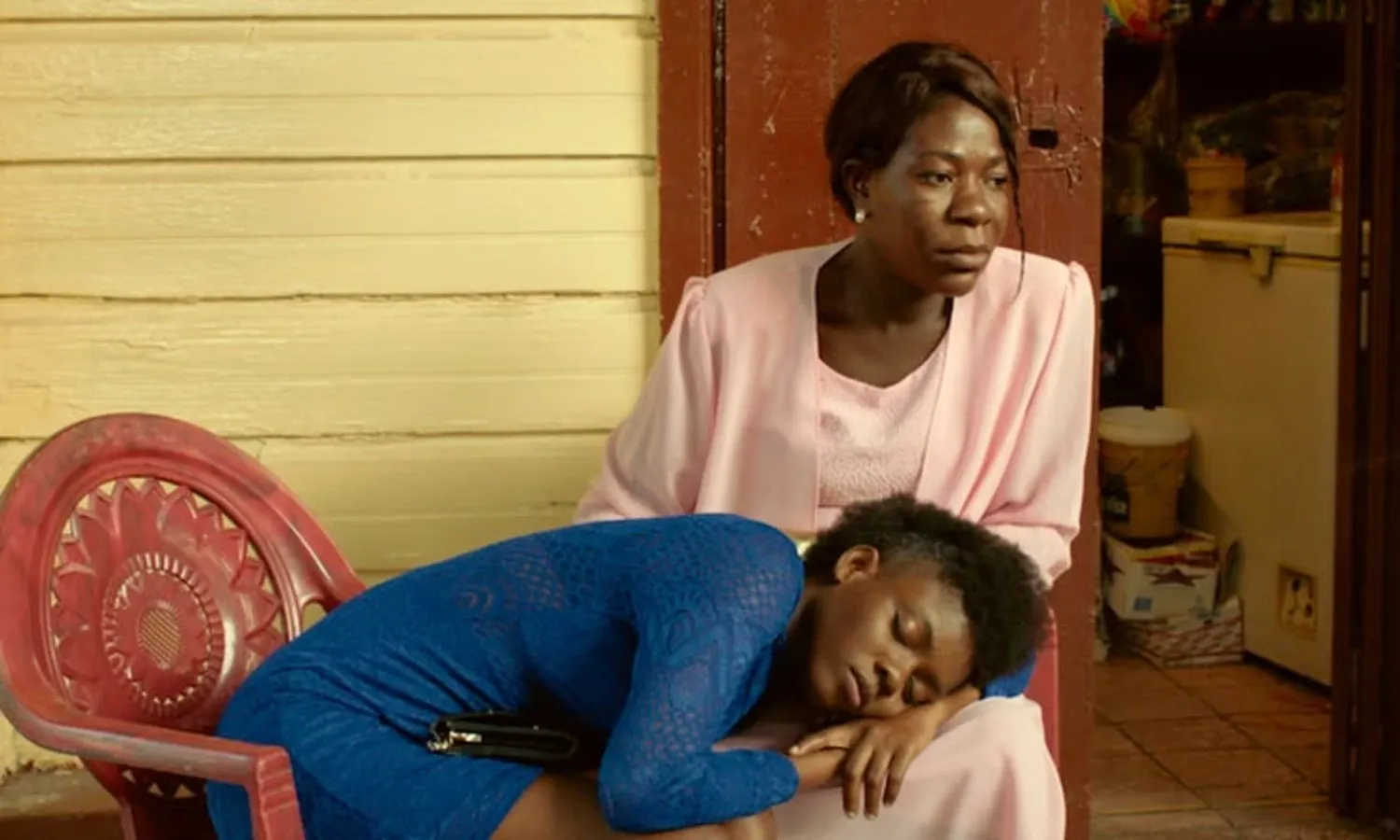
On the primary night time, the quick movie“Music for the New World”, directed by Miryam Charles and “Freda”, directed by Gessica Geneus had been featured. The movies explored themes of longing, grief, psychological well being sickness, gender-based violence, desperation, alternative and lack thereof.
It invoked frustration in attendee Mehika Sephorah, who had an emotional response through the film.
“Watching this movie [Freda] makes me offended. It’s the system. The system appears to be for us however it’s in opposition to us,” she mentioned.
Sephorah famous that her life doesn’t precisely mirror the protagonist however that when she moved to the U.S. from Haiti, it was understood that, as a younger woman, she was going to do the caretaking of her youthful siblings. Her gender and age acted as a proper decree. “It’s by some means ingrained in us that we’ve to take cost,” she mentioned.
Joseph had a unique takeaway from the movie, noticing Geneus exploring the thought of neighborhood that exists in womanhood.
“Gessica [Geneus] takes her time with portraying her feminine characters,” she mentioned. “ For a narrative that may be unhappy at occasions, she was nonetheless capable of give a whole lot of the ladies company.”
The themes of the second night time shifted towards the diasporic expertise. The duo confirmed “Konpa”, directed by Al’Ikens Plancher and “Mountains”, directed by Monica Sorelle.
These movies had rather a lot in frequent, together with an editor and a setting in Little Haiti, Miami. They each mentioned themes of language, displacement, gentrification, intergenerational relationships and cultural expectations.
Atibon Nazaire, the actor who performs Xavier, the protagonist in Mountains, joined the post-show panel alongside Al’Ikens Plancher.
“Little Haiti is disappearing quick because of infestation,” he mentioned, referencing builders within the fast-gentrifying Little Haiti neighborhood of Miami.
As the gang laughed at his phrase alternative, Nazaire doubled down and mentioned the character’s motivation stemmed from his love for Haiti.
“Haiti is a spot the place you possibly can dream of all prospects,” he mentioned.
What landed as each refreshing and disappointing was how a lot the collection illuminated: the movies had been nuanced and particular, refusing to flatten Haiti right into a single story. However that very same richness additionally served as a reminder of how few solutions exist for the realities they depicted.
Plancher’s purpose in creating his movie was clear. “I wanted to make a movie the place my dad might be seen and my sister might be seen,” he mentioned through the post-show panel.
The Lakay movie collection positioned cinema as a way of accessing an area that’s usually misunderstood. The movies additionally spotlight the complexity of every character.
Cherubin and Joseph intend to increase the collection to different main Haitian hubs across the nation, together with Miami and Boston.
“Seeing our tradition, language, dance and music so fantastically displayed on display screen, it’s a portal into Haiti and our identification as Haitians,” mentioned Cherubin.
“Cinema is one in every of our most accessible and mandatory types of entry to our tradition,” Cherelus mentioned. “It’s a manner that we are able to management the narrative and what tales are being informed about Haitians, and I feel that’s extraordinarily important for the following era of Haitians. If we can’t return house, making it accessible by means of artwork is de facto necessary.”