
Overview:
As Konpa receives unprecedented recognition from UNESCO and New York Metropolis, Garry Pierre-Pierre argues that the style faces its biggest existential problem. Reflecting on a latest celebration in Brooklyn, he examines the decline of the Haitian nightclub ecosystem, the weakening cultural ties between Haiti and its Diaspora, and the necessity to construct new establishments that preserve Konpa alive for future generations.
Konpa has by no means acquired extra recognition than it’s receiving in the present day.
Inside just a few months, UNESCO designated Haiti’s signature musical style as Intangible Cultural Heritage, and New York Metropolis formally acknowledged it as a part of town’s cultural cloth.
But I left a latest celebration of these milestones at BRIC in Downtown Brooklyn with an unsettling realization: Konpa is being honored at exactly the second the ecosystem that sustained it for generations is quietly disappearing.
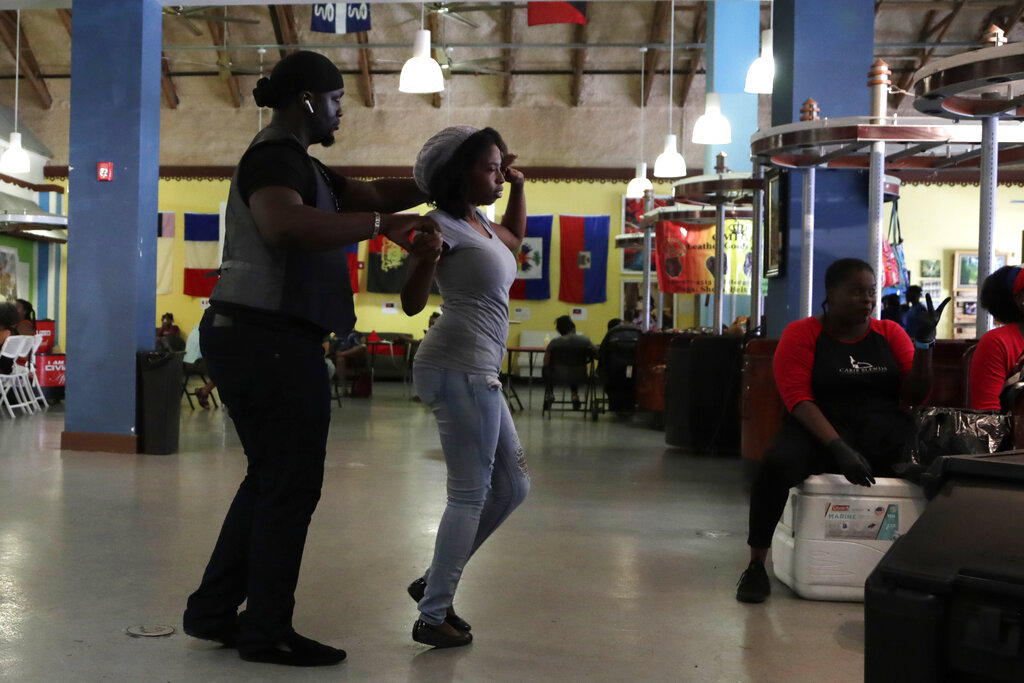
It had been years since I attended a gathering like this within the Haitian neighborhood.
COVID modified the way in which we collect. Then life carried me to Indiana for a number of years earlier than bringing me again to the New York space not too long ago. Strolling into BRIC in Downtown Brooklyn felt much less like attending an occasion than returning to a household reunion whose heartbeat remained acquainted.
The room mirrored that achievement. Outdated buddies embraced. Musicians mingled with politicos, promoters and neighborhood leaders. For just a few hours, the diaspora gathered round a shared reminiscence.
Recognition and vitality will not be the identical factor. You’ll be able to protect a language whereas fewer folks communicate it. You’ll be able to designate a historic constructing whereas nobody lives inside it. Heritage, if we’re not cautious, can develop into one other phrase for nostalgia.
That paradox ought to have been the night’s central dialog. As an alternative, the panel by no means fairly discovered its footing.
Moderated by media persona Carel Pedre, the occasion introduced collectively 10 musicians, journalists and cultural figures to debate Konpa from its founding by Nemours Jean Baptiste in 1955 to its place in the present day. The problem was not the moderator however the construction. With so many voices sharing the stage, the dialog drifted from one anecdote to a different with out discovering its narrative backbone. It was like listening to an orchestra tuning its devices. Each sound was acquainted, however nobody introduced them collectively right into a symphony.
The story was sitting there, ready to be advised.
How did New York develop into the capital of Konpa outdoors Haiti?
How did the primary Haitian bands set up themselves in the course of the Seventies?
How did Brooklyn develop into the middle of an leisure business that packed golf equipment almost every single day and weekend?
What did it take for promoters to construct a thriving musical financial system earlier than social media, streaming and smartphones?
These are the questions that designate how New York turned Konpa’s second capital for some time. The panel included folks uniquely positioned to reply them.
King Kino, a founding father of Phantoms, and Alex Abellard, maestro of Zin, may have taken us behind one in every of Konpa’s defining rivalries in the course of the Nineties and early 2000s. Their competitors pushed bands to develop into extra inventive, extra disciplined and extra formidable. Rivalries, in any case, typically sharpen excellence. These musicians ushered in a sound generally often called “New Technology” and advanced the style when Zouk was siphoning listeners away from Konpa.
Tabou Combo, deservedly celebrated all through the night, was handled virtually as an establishment reasonably than a dwelling historical past. Few Caribbean bands have remained related throughout 5 many years whereas introducing era after era to the identical music. But surprisingly little was shared about how they sustained themselves via altering audiences, applied sciences and tastes.
Many of the viewers was sufficiently old to have lived via these years. We danced via them. We watched golf equipment fill till daybreak. We noticed bands rise, fracture, reinvent themselves and disappear. We knew sufficient to acknowledge when complete chapters had been skipped.
Essentially the most astonishing omission, nevertheless, was silence. System Band was by no means talked about.
For anybody who understands Konpa’s evolution, that omission borders on incomprehensible.
System Band compelled Konpa to mature. Their heavier sound reshaped the style, whereas their lyrics ventured into topics well mannered Haitian society typically prevented, from Vodou and lesbianism to Haiti’s deeply rooted class divisions. They impressed a whole era of bands, together with Klass, Djakout Nu Look, and so forth., proving that Konpa may evolve with out abandoning itself.
Leaving System Band out of a dialog about Konpa’s evolution is like discussing jazz with out Charlie Parker or hip hop with out Public Enemy.
Many individuals assume Konpa declined just because youthful audiences modified their musical tastes. The truth is extra sophisticated.
The nightclub scene that when outlined Haitian weekends has largely vanished. Promoters manage far fewer bals than they as soon as did. Many performances now happen primarily as fundraising occasions for neighborhood organizations reasonably than as business concert events. The economics merely not work.
The outdated mannequin was not often profitable. Promoters accepted modest income and even losses as a result of the music itself mattered and since proximity to beloved artists carried its personal rewards. That equation not is smart for a lot of youthful entrepreneurs.
However Konpa’s biggest problem lies past New York, Miami or Montreal.
Its biggest problem is Haiti itself.
For generations, Carnival and fèt chanpèt, ancestral city celebrations, served as Konpa’s laboratory. Diaspora guests returned house annually and found rising bands earlier than bringing them overseas via concert events and excursions. Haiti was the properly from which Konpa frequently drew contemporary water.
As Haiti has descended from political disaster into institutional collapse, fewer members of the diaspora journey house. Fewer promoters scout new expertise. The pure circulation that when linked Haiti to its world viewers has weakened.
Tradition is sort of a river. It survives as a result of it retains transferring. When the present slows, even the deepest river begins to lose its power.
When Haiti’s politics divide us, Konpa has typically united us.
That perception ultimately led The Haitian Occasions to create Kreyolfest. It was by no means meant to be simply one other music pageant. It was an try and create an establishment the place Haitian music might be celebrated throughout generations.
At its peak, Kreyolfest attracted greater than 15,000 folks and have become one of many largest Haitian cultural gatherings within the diaspora. COVIDinterrupted that momentum. Migration patterns modified. We later tried to reinvent the pageant as Banboch Kreyòl at a venue alongside the Coney Island boardwalk, however the second had shifted.
What by no means modified was the necessity.
Right this moment, Rabòday has develop into the strongest cultural present pulling many youthful Haitians. Infused with the vitality of Afrobeats and pushed by themes that resonate with a brand new era, it displays a altering viewers reasonably than a disappearing one. Michael Brun’s Bayo concert events, promoting out three consecutive nights in Brooklyn, show that younger Haitians nonetheless starvation for cultural experiences.
They merely collect round completely different rhythms.
Quite than seeing Rabòday as Konpa’s rival, maybe we should always see it as proof that Haitian music continues to evolve, simply as Konpa itself as soon as did.
The night at BRIC finally left me hopeful. Not as a result of each query was answered. Fairly the alternative.
It left me hopeful as a result of scores of individuals nonetheless confirmed up on a summer time night merely to have fun Konpa. They got here to recollect, to reconnect and, maybe with out realizing it, to reaffirm that this music nonetheless occupies a sacred place in our collective identification.
Councilmember Rita Joseph deserves monumental credit score for serving to make that occur. My hope is that this doesn’t develop into merely one other annual celebration, however the starting of one thing bigger. Every year may discover a unique chapter of Konpa’s historical past: the pioneers who introduced the music to New York, the rivalries that formed an period, the promoters who constructed an business, the ladies whose contributions have too typically been ignored, and the younger artists now redefining Haitian music.
Maybe that’s the lesson of the night. Konpa will not be one thing we protect just because it’s 71 years outdated. We protect it as a result of it nonetheless has the facility to convey us into the identical room, remind us who now we have been and assist us think about who we would but develop into.
That, greater than any proclamation or designation, is what retains a tradition alive.