
Overview:
Chedner Vaillant made his firm into an financial launchpad for Haitian newcomers in Central Ohio, providing regular wages and a primary foothold in America. With Momentary Protected Standing ending, he faces the lack of the very staff his enterprise supported and that assist him develop.
PLAIN CITY, Ohio — For practically one decade, Chedner Vaillant spent his days working full-time in building and flipping homes, whereas dedicating his evenings and weekends to doing duties throughout Central Ohio as a tasker by way of a well-liked app.
Throughout numerous gigs, Vaillant chipped away at a broader dream: constructing one thing of his personal. Lastly, in 2024, he stop his day job to run Z-Remodeling and Hardscaping full-time.
Based mostly in Plain Metropolis and serving Columbus, Springfield and the encircling area, Z-Transforming does greater than inside repairs, customized patios and kitchen renovations. For a lot of newly arrived Haitian immigrants in Central Ohio, Vaillant’s firm has served as a necessary financial launchpad. A spot to earn regular wages, be taught a commerce and navigate the advanced strategy of constructing a brand new life in the US.
“It’s good to offer Haitians a chance to work figuring out they’re supporting their households again in Haiti, simply as I’m,” Vaillant mentioned.
Now, nevertheless, as immigration insurance policies grow to be extra restrictive for Haitians, which prohibits Vaillant from hiring the very folks for whom Z-Transforming has been a stepping stone, the enterprise itself should navigate new headwinds whether it is to outlive.
“Z-Transforming was constructed on giving guys a good likelihood to work exhausting, construct a life, and be taught a commerce,” Vaillant, 39, mentioned.
“Once you shut down their authorized standing in a single day, you’re not simply stopping them from incomes an trustworthy residing — you’re taking away the palms that construct these initiatives,” he mentioned. “If we are able to’t rent the employees who need to be out right here working, the enterprise can’t develop. It’s that easy.”

A basis constructed on persistence
Vaillant’s journey within the U.S. started in 2015, when he arrived from Haiti on a K-1 fiancé visa. It permits a foreign-citizen fiancé of a U.S. citizen to enter the U.S., supplied the couple marries inside 90 days of arrival.
Having spent a lot of his grownup life launching small initiatives equivalent to laying mulch, cleansing up yards and landscaping, he instantly threw himself into the American labor market, absorbing as a lot hands-on commerce expertise as he might. Making patios, house-flipping and residential repairs, landscaping and outside upkeep had been among the many quite a few construction-related jobs the place he gained expertise.
Whereas the decade-long immersion gave him the technical confidence to exit on his personal, his lived expertise as an immigrant formed his enterprise mannequin into one thing deeper than mere revenue. Although the married father of 4 is now settled as an Ohioan, Vaillant nonetheless remembers the trepidation of coming to a brand new land.
“Once you arrive in a brand new nation with nothing however hope and a piece ethic, you simply want one particular person to open a door for you,” Vaillant mentioned, rising emotional throughout a latest interview with the Haitian Occasions.
“I bear in mind what it felt prefer to be new right here, making an attempt to construct a basis from scratch,” he added. “That’s why Z-Transforming isn’t only a job web site to me. It’s a spot the place a man can stroll in carrying the burden of uncertainty and stroll out with a paycheck, a way of satisfaction, and a path ahead.”
An financial touchdown pad for brand spanking new arrivals
Central Ohio’s Haitian inhabitants expanded to greater than 20,000 from just a few thousand previous to 2020, in response to the Haitian Community Network (Haconet) in Columbus. Most frequently face steep hurdles — language limitations, advanced administrative methods and the pressing have to earn cash — whereas checking out authorized paperwork, equivalent to making use of for TPS.
-
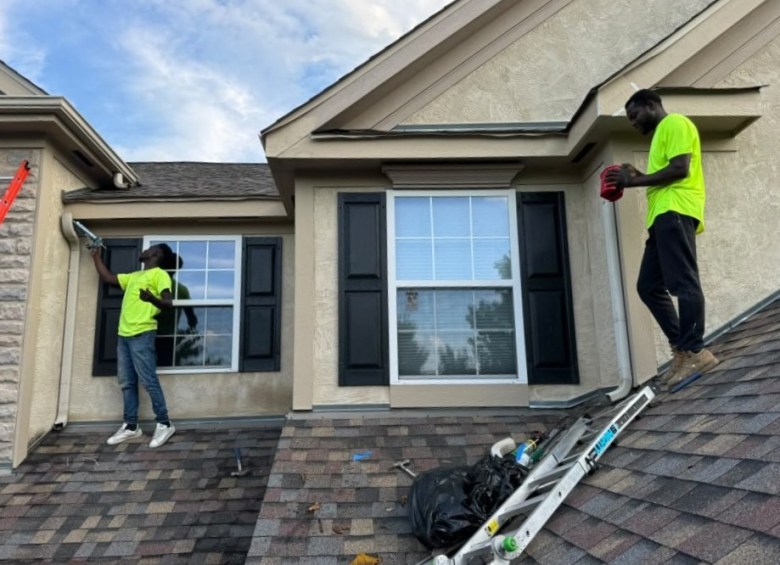
Z-Transforming & Hardscaping workers fixing the roof of a home in July 2024. Picture courtesy of Z-Transforming & Hardscaping -
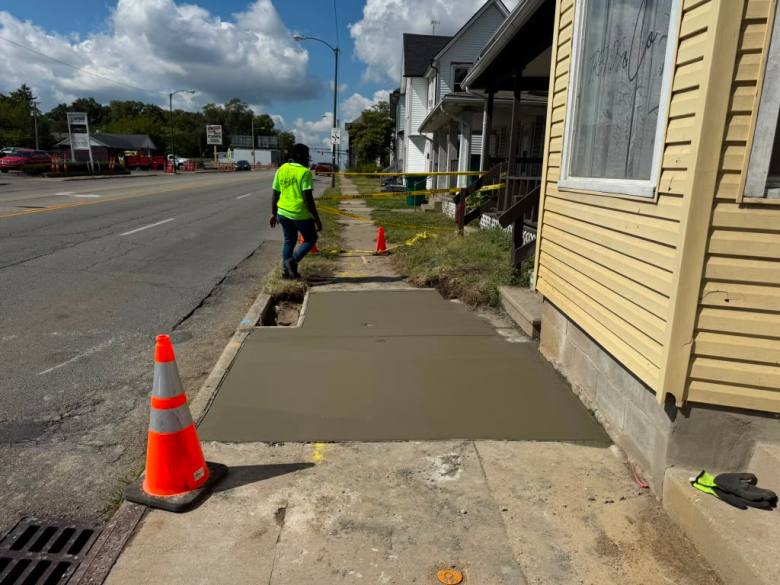
Staff of Z-Transforming & Hardscaping reviewing poured concrete because it dries on the entrance of a resident’s dwelling in July, 2025. Picture by Z-Transforming & Hardscaping -

Vaillant, proprietor of Z-Transforming & Hardscaping, including the ultimate touches to the outside of a resident’s storage that was fastened by his workers, in July 2024. Picture by Z-Transforming & Hardscaping
-

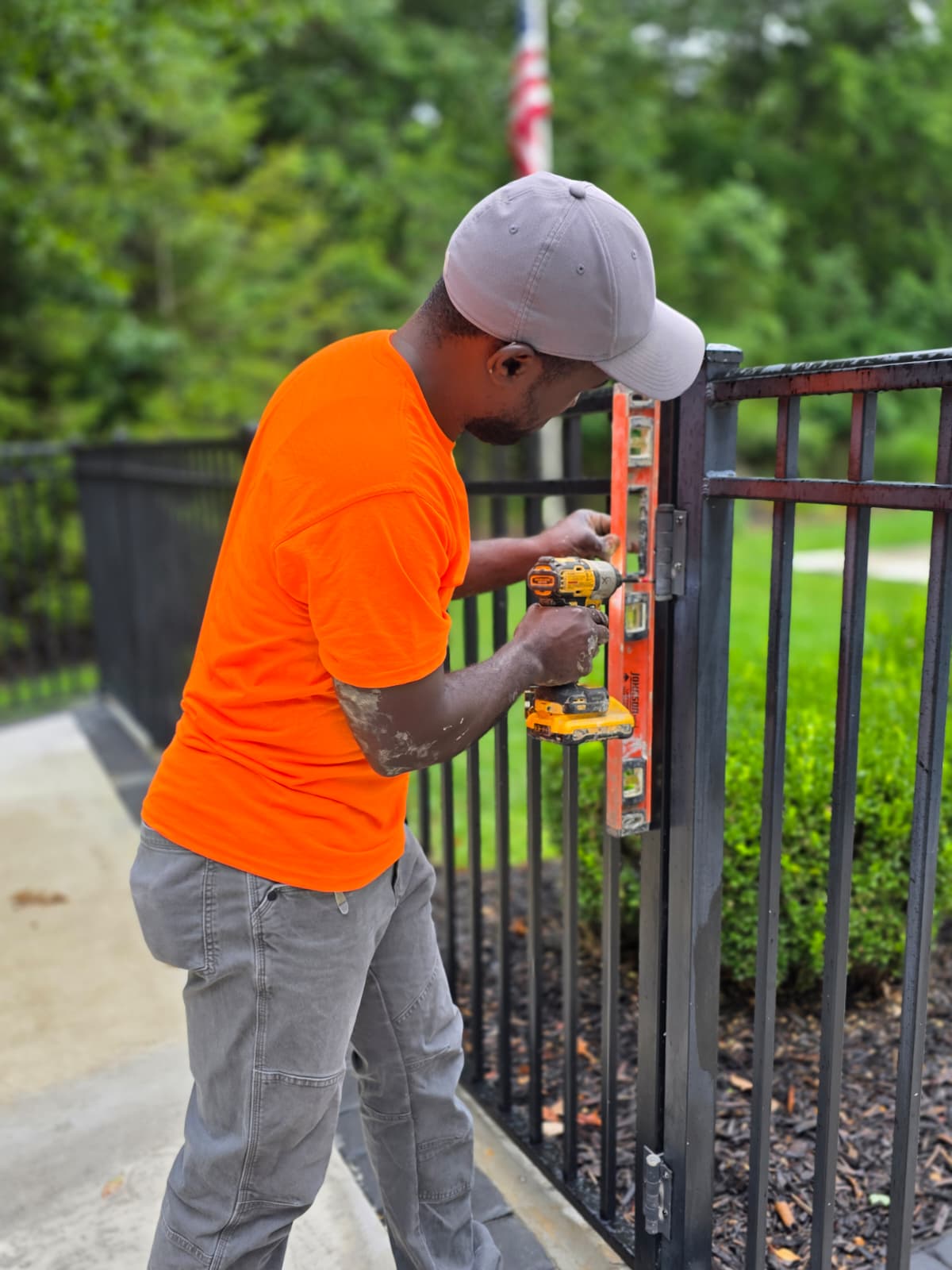
Vaillant fixing a again patio fence for a house proprietor in Columbus, Ohio on Wednesday, August 12, 2026. Picture by Rupal R. Shah for The Haitian Occasions.
For a lot of, Z-Transforming turned their first employer within the U.S. Slightly than viewing non permanent authorized standing or language limitations as obstacles, Vaillant noticed a chance to supply dignity and assist.
“There’s a particular feeling working with folks that share your tradition and language,” Vaillant mentioned. “For a few years, I didn’t have that right here. Many guys don’t converse English after they get right here, and this offers them the chance to get some work expertise whereas they’re nonetheless getting snug with a brand new language.”
Vaillant’s small crew — sometimes ranging between three to 5 staff relying on undertaking calls for — acts as a sensible coaching floor. With annual revenues of about $200,000, paying $20 per hour to staff, nicely above the state minimal wage, was inside finances for the enterprise.
Vaillant remembers the primary fellow Haitian he employed, who had arrived in Columbus, Ohio by way of the Cuban Haitian Nicaragua Venezuela Parole Program (CHNV), the humanitarian parole course of generally generally known as “the Biden Program.”
“For the primary 12 months, it was simply him and me,” Vaillant recalled. “I took him to each job with me. He was capable of achieve a whole lot of experiences that means.”
One crew member, a talented concrete employee who beforehand lived in Brazil, was amongst a number of staff who arrived after touring by way of South America. He was capable of acquire Temporary Protected Status, then gained asylum whereas working with Vaillant. One other younger employee used his earnings to fund the authorized paperwork required to use for asylum earlier than going into one other full-time position.
Since most individuals who work with him additionally produce other jobs or are sometimes busy with paperwork, Vaillant is versatile with work schedules.
A former worker mentioned the job Z-Transforming gave him a lifeline as he settled in.
“After I first got here I appreciated the chance to work with Chedner,” the previous employee mentioned. “Not solely did he give me a job, however he picked me up from work after I didn’t have a driver’s license or a automobile to drive.”
“I’ve additionally loved working with him,” he added.
Coverage shifts, standing and rising worry
Nevertheless, the very important financial pipeline Vaillant constructed is now being severely examined.
In Ohio, immigrants are 30% extra more likely to launch small companies and fill over 20% regional logistics and manufacturing roles. Throughout Central Ohio, the place foreign-born residents contribute over $2 billion yearly in whole taxes and maintain over $5 billion in native spending energy, in response to a research study by the American Immigration Council.
Advocates, enterprise house owners and high leaders, together with Ohio Gov. Mike DeWine, a Republican, have warned for months that the lack of authorized work authorization immediately jeopardizes companies counting on immigrant labor, native tax coffers and regional provide chains.

With Momentary Protected Standing for Haitians set to run out, some within the city focused by candidate Trump describe the worry borne of seeing each immigration door closing

From quieter gyms, church buildings and eating places to canceled plans, on a regular basis life is occurring pause — once more
Now, the lack of TPS work authorization and intensified mass deportation techniques, equivalent to ankle screens being positioned on Haitians in close by Springfield, have reworked each day life in a single day.
Z-Transforming is beginning to really feel the consequences immediately.
“The fellows that had been right here on TPS are discouraged. They’re scared to go wherever,” Vaillant mentioned. “I’ve had folks that have needed to cease working. They don’t know what they’re going to do. They will’t pay lease or purchase groceries. Even the lads which have secured asylum are scared to exit.”
The pervasive local weather of hysteria has made it troublesome to maintain crews absolutely staffed and jobs on schedule. To maintain shifting ahead, Vaillant has needed to modify his operations.
“It’s tougher to search out Haitians proper now which can be capable of work or aren’t scared,” Vaillant explains. “I’ve employed a few males from the Latino group to work as nicely.”
He takes the adjustment in stride, recognizing it as a essential step to maintain operations working. His expertise illustrates a rising actuality throughout Central Ohio: small enterprise house owners doing no matter it takes to bridge continual labor shortages amidst a shrinking pool of legally approved staff.
Now, as he watches his crew members navigate sudden authorized vulnerability, the added threat hits near dwelling. He sees his enterprise not simply as a enterprise, however as an important assist community supporting households that depend on remittances again dwelling.
“I’m involved about all Haitian immigrants,” Vaillant mentioned. “There are a lot of individuals who have been right here for a very long time. It’s a lengthy, exhausting course of to alter their standing to remain right here. Issues in Haiti are very troublesome proper now. Many individuals wouldn’t be right here in the event that they didn’t must be.”
“Individuals have come right here and began their lives over,” he added.
And he’s residing proof, by way of obstacles and all. Now, he simply hopes the labor market will enable him to proceed residing his dream.