
Overview:
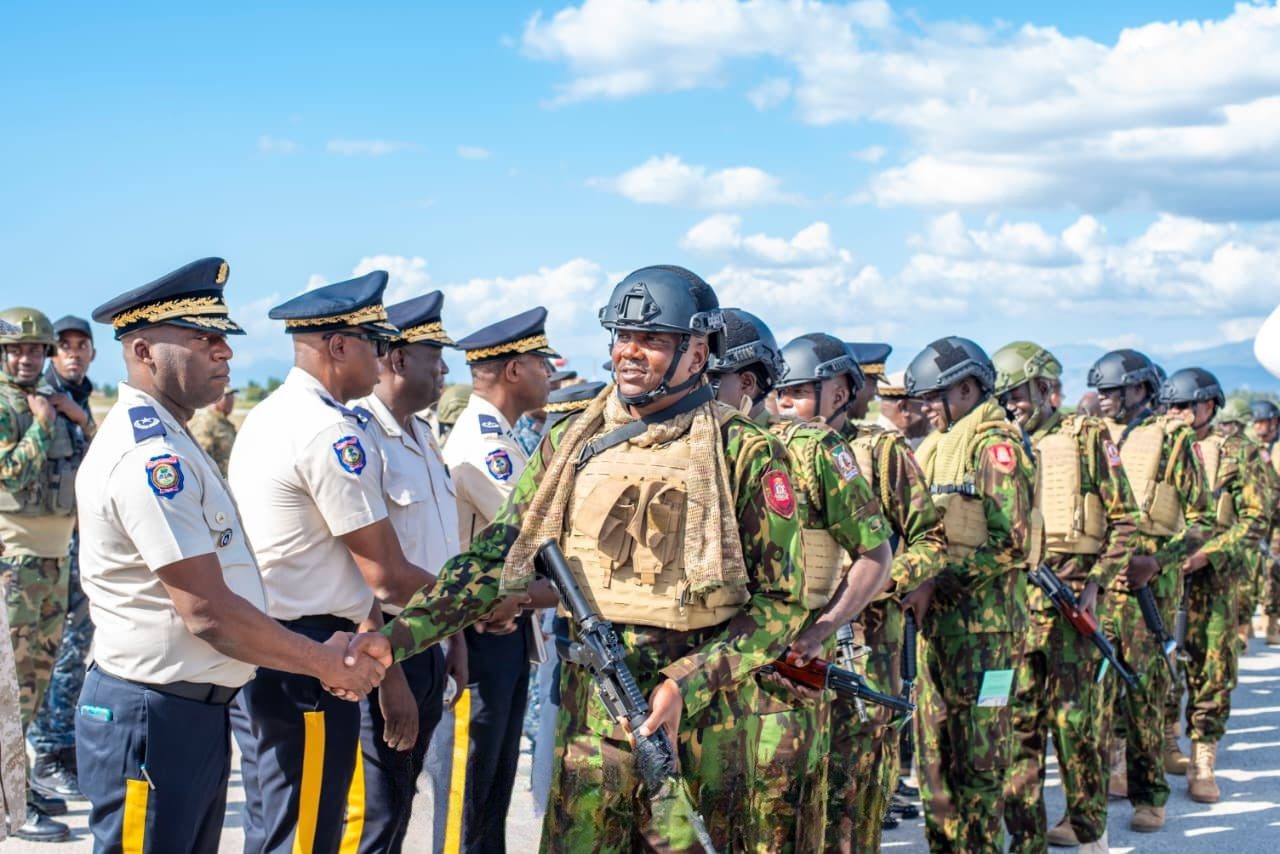
The ultimate contingent of Kenyan police left Haiti Monday, ending the Multinational Safety Help (MSS) mission, which struggled with restricted funding, authorized challenges and an incomplete deployment, as Haiti transitions to a brand new worldwide safety power— the Gang Suppression Drive (GSF). Regardless of these difficulties and what observers understand as an entire failure of the Kenya-led MSS to meet its mandate to assist curb gang violence, Haitian authorities reward the mission’s dedication and cooperation.
PORT-AU-PRINCE — The ultimate contingent of Kenyan police deployed below the Multinational Safety Help (MSS) mission left Haiti on April 27, ending a mission that struggled to curb gang violence, as armed teams proceed their management over a lot of the nation.
Monday withdrawal completes the exit of Kenyan personnel who had been supporting the Haitian Nationwide Police (PNH) in operations towards armed teams. It additionally indicators an official transition to a brand new multinational initiative, the Gang Suppression Drive (GSF), accepted by the United Nations Safety Council final fall.
In an announcement posted on X, officers related to the brand new power praised the Kenyan contingent’s service below tough situations.
“When Haiti wanted help most, Kenya answered the decision,” the GSF assertion reads. “This dedication to peace and repair past borders leaves an enduring legacy.”
A mission hindered from the beginning, with restricted influence as violence escalated
From the outset, the MSS mission confronted delays, funding gaps and operational challenges that restricted its influence.
Accepted by the U.N. Safety Council in October 2023, the deployment was initially blocked by authorized challenges in Nairobi earlier than Kenyan courts cleared the way in which. Even then, the mission by no means reached its deliberate power.
Even after approval and pledges of help from member nations, the mission struggled to fulfill its targets. Kenya pledged about 1,000 officers, however fewer than 800 had been deployed. The broader multinational power was anticipated to achieve 2,500 personnel, however by no means got here near that quantity.
Funding additionally fell brief. Of an estimated $600 million annual finances, roughly $400 million was secured, largely from the US, leaving gaps that restricted operations, gear and logistics.
Analysts and Haitian observers have mentioned the mission lacked a transparent operational framework, together with ample intelligence capability, coordination mechanisms and long-term political backing — all crucial in confronting closely armed and entrenched gangs.
“When Haiti wanted help most, Kenya answered the decision. This dedication to peace and repair past borders leaves an enduring legacy.”
GSF assertion
Regardless of joint operations with Haitian police, the mission struggled to considerably weaken gang networks.
Armed teams continued increasing their management throughout Port-au-Prince and past, with the UN estimating that greater than 90% of the capital is below gang affect. The armed teams have additionally expanded their grip on a few of Haiti’s provincial cities, from the Artibonite area to the Central Plateau and the Southeast departments, lengthy thought of safer. The Group for Migration (IOM) says displacement has surged to about 1.45 million folks in the course of the mission’s deployment.
Civil society teams have criticized the mission’s restricted outcomes, noting that key gang leaders had been neither captured nor neutralized.
The mission additionally confronted controversy. The United Nations documented a number of allegations of sexual exploitation and abuse involving personnel. Whereas some instances had been substantiated and victims obtained help, Kenyan authorities denied wrongdoing and dismissed the claims.
Haitian authorities acknowledge help as deployment of latest power begins amid uncertainty
Regardless of the challenges, Haitian officers expressed gratitude for the Kenyan presence.
At a ceremony marking the departure, PNH leaders praised the contingent’s cooperation and dedication, noting that personnel operated with restricted assets and in unfamiliar terrain.
The Kenyan officers had labored alongside forces from nations together with the Bahamas, Jamaica and El Salvador in an effort to stabilize the nation forward of long-delayed elections.
With the ultimate contingent of MSS departing, Haitian authorities are actually turning to the GSF, which they hope will succeed the place the Kenya-led mission fell brief.
About 400 personnel from Chad have already arrived, with extra contributions anticipated from nations together with Bangladesh and Sri Lanka. The power is projected to achieve 5,500 members and turn into totally operational by October 2026.
“Haiti doesn’t want guarantees, however motion.”
Prime Minister Alix Didier Fils-Aimé
It should obtain logistical and operational help by way of a UN-backed mechanism—the newly created United Nations Help Workplace in Haiti (UNSOH). The power may also be funded by member states.
Prime Minister Alix Didier Fils-Aimé has referred to as for fast deployment, emphasizing that safety is important to restoring democratic order.
“Haiti doesn’t want guarantees, however motion,” he told the U.N. Safety Council on April 23.
But, the top of the Kenya-led mission comes as violence continues to displace communities and disrupt day by day life.
Clashes amongst rival gangs persist within the Cul-de-Sac plain and different areas, whereas state authority stays restricted.
For a lot of Haitians, the departure of the MSS underscores a broader concern: that worldwide efforts have but to match the dimensions of the disaster.
Whether or not the brand new power can change that trajectory stays unsure.