
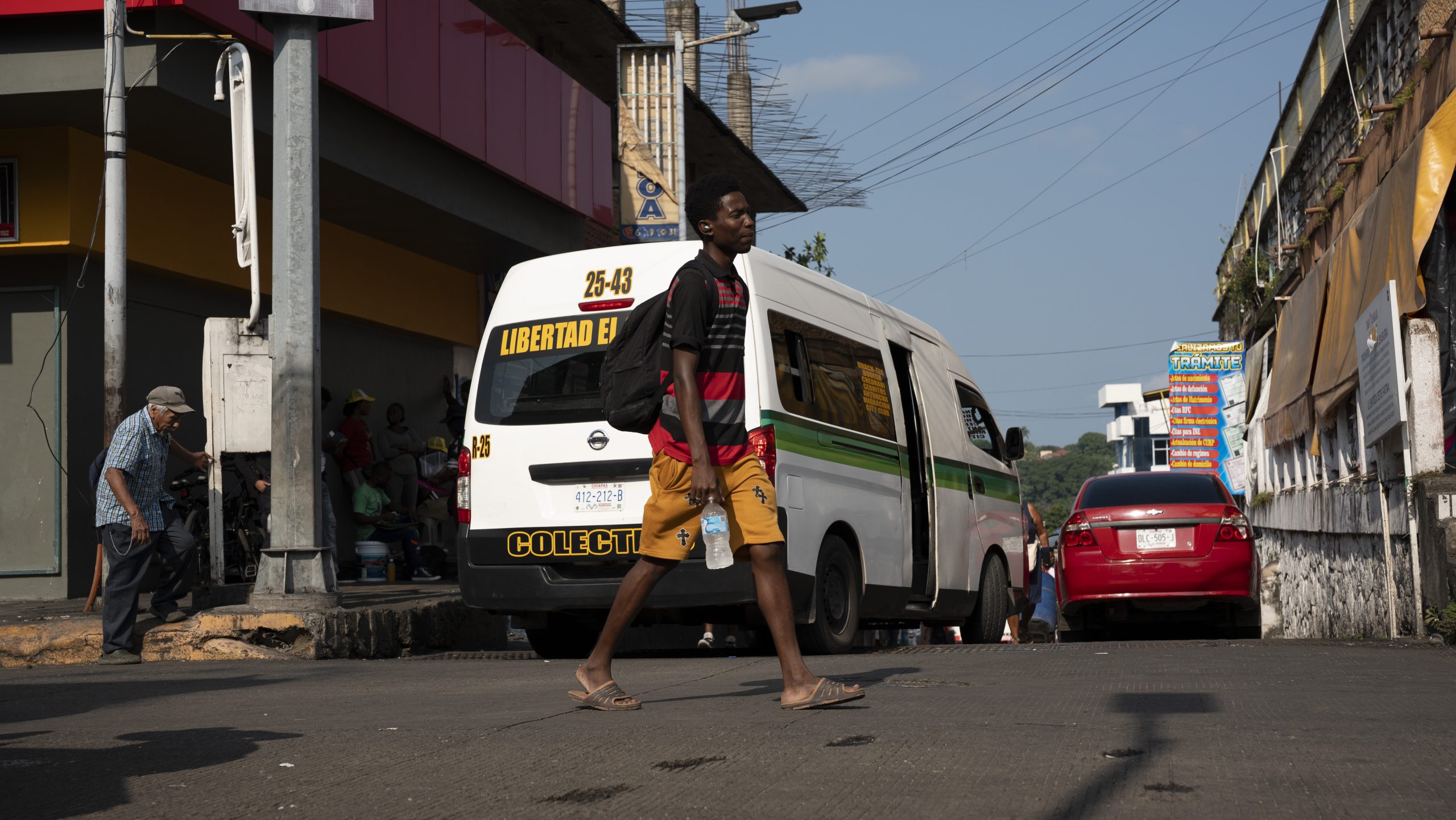
Roberto lives that actuality all too typically, present in a area with a few of Mexico’s highest
charges of
unemployment and casual labor. As he waits, he’s required to signal a COMAR attendance type to
verify that he needs to proceed in search of asylum. Failure to finish the shape, in COMAR’s eyes,
means the applicant has left the arrival state and, subsequently, deserted their case.
Roberto, the native of
gang-ravaged city
— a notoriously gang-ravaged city simply outdoors Haiti’s capital — wouldn’t thoughts ready so lengthy
if
he may work whereas doing so. Final November, he was sitting at a park in
Tapachula’s downtown plaza
, the place scores of Haitians typically wait to search out odd jobs or discuss with one another, when he
shared
his frustration.
“Daily I am on the road on the lookout for work, however I am unable to discover something,” he stated. “With out
paperwork, we are able to’t work, and we’re individuals who strongly consider in working.”
Unable to search out jobs in ironworking, his specialization in Haiti, Roberto seeks out development
websites. However jobs are sporadic. Typically, he worries about paying his a part of the $120 room he shares
with two different folks, and supporting his 4 siblings, the rationale Roberto stated he left Haiti
in
the primary place.
“Each month you could have lease to pay, it’s good to eat and also you’re not working,” Roberto stated.
A month later, when Roberto subsequent spoke to The Haitian Instances, he was nonetheless struggling. “I am right here
with none assist,” he stated. “I am unable to assume straight. My siblings name me asking for assist, however I
can not help them as a result of I am unable to even assist myself.”